Paris is one of the most beautiful cities in the world and one that we think everyone assumes has to be expensive. It does not. Some of our best memories in Paris came from the simplest things — sitting alongside the Seine with a bottle of wine from the grocery store, watching the Eiffel Tower light up at night, wandering through Montmartre without a plan. We have done Paris on a tight budget and it remains one of our favourite trips. Yes, the Michelin-starred restaurants and the designer boutiques are there if you want them. But the things to do in Paris that we love most are almost entirely free.
This complete guide covers everything — when to visit, where to stay, where to eat without breaking the bank, the best things to do in Paris, and how to see one of Europe’s greatest cities without spending a fortune.
WHEN TO VISIT PARIS
Paris is a year-round city but spring (April through June) is the classic time to visit — long days, mild temperatures, and the city at its most romantic and photogenic. The chestnuts are in bloom, cafe terraces are full, and the light is extraordinary. September and October are equally good with fewer crowds than summer and a wonderful golden quality to the city.
July and August are hot and busy — many Parisians actually leave the city in August, which means some local restaurants and shops close. Winter is cold but Paris at Christmas is charming and hotel prices drop significantly. If budget is a priority, shoulder season in spring or fall gives you the best combination of weather and value.
HOW TO GET TO PARIS
Paris Charles de Gaulle (CDG) is the main international airport with direct flights from most US cities. Orly (ORY) handles more domestic and European routes. From CDG, the RER B train takes about 40 minutes to central Paris and is the cheapest option. A taxi or rideshare runs €50–70 depending on traffic.
By train from within Europe, Paris connects directly to London (2.5 hours via Eurostar), Brussels (1.5 hours), Amsterdam (3.5 hours), and dozens of other European cities. The Eurostar from London is one of the great train journeys in Europe and drops you directly at Gare du Nord in central Paris.
Pro Tip: Grab an eSIM before you leave home so you have data the moment you land. Saily is our go-to — use code THEJETLAGJOURNEY25 for 25% off. Airalo is a great alternative (code JLJ10 for 10% off).
CURRENCY AND TIPPING IN PARIS
Paris uses the Euro. Card payments are widely accepted. Tipping is not as expected as in the US — leaving a few euros or rounding up the bill at a sit-down restaurant is appreciated but not mandatory. At cafes, leaving the small coins from your change is standard. Never feel obligated to tip 20 percent the way you would in the US.
WHERE TO STAY IN PARIS
Paris is divided into 20 arrondissements and the one you stay in shapes your experience of the city. The most central options (1st through 8th) put you close to the main sights but come at a premium. Here is where we suggest looking.
For first-timers: The Marais (3rd and 4th arrondissement) is our top pick — beautiful architecture, great restaurants and bars, walkable to Notre Dame and the Seine, and a genuine neighbourhood feel. Le Montmartre (18th) is charming, more affordable, and gives you the artistic village atmosphere Paris is famous for.
Budget tip: The outer arrondissements (11th, 12th, 19th, 20th) offer significantly cheaper accommodation while remaining well connected to the centre by metro. When we did Paris on a budget, we stayed outside the main tourist districts in a room with an unobstructed view of the Eiffel Tower for around $50 a night — proof that you do not need to pay central Paris prices to get a remarkable Paris experience. Look for hotels near metro lines rather than in the most expensive central postcodes.
Luxury: Le Bristol, Hotel Plaza Athénée on Avenue Montaigne, or the Ritz on Place Vendôme.
WHERE TO EAT IN PARIS
Eating well in Paris does not require a large budget — it requires knowing where to look. The city has an excellent tradition of affordable bistro dining, covered market halls, and street food that rivals anything in Europe. These are the places we come back to.
Xavier Privas Street (Latin Quarter) — one of the best streets in Paris for affordable dining. Lined with small restaurants serving everything from Greek to Lebanese to French classics, most with fixed-price menus running €10–15. A JLJ favourite for dinner on a budget.
Marché d’Aligre — one of the best and most authentic food markets in Paris, open daily except Monday. Cheap produce, excellent cheese, good street food, and a very local crowd. In the 12th, a short metro ride from the centre.
L’As du Fallafel, Le Marais — the most famous falafel in Paris and genuinely one of the best we have eaten anywhere. Queue down the street, worth every minute. Under €8.
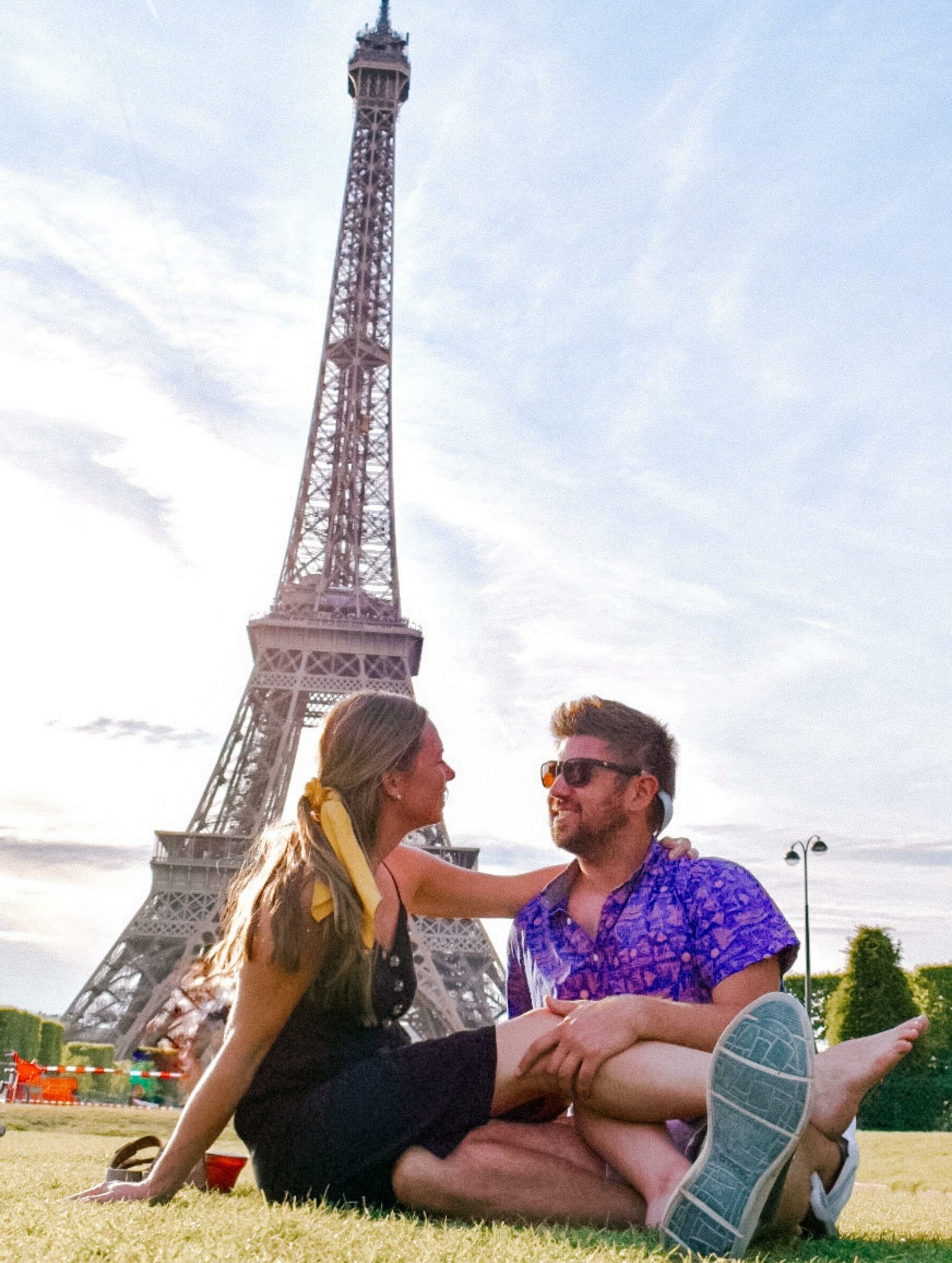
Wine from the supermarket, alongside the Seine — this is not a restaurant recommendation but it is one of our genuine Paris tips. Buy a decent bottle from Monoprix or Franprix, pick up some cheese and a baguette, and find a spot along the Seine as the sun goes down. It costs €10 total and it is one of the most memorable things you will do in the city. Paris was built for this.
Pro Tip: Download TheFork before your trip — it works across Paris and lets you find meal deals and book tables at restaurants throughout the city.
WHERE TO DRINK IN PARIS
Paris is a city for drinking slowly and lingering. The classic Parisian cafe — a glass of wine or a pastis, a seat facing the street, no rush to leave — is an experience as much as it is a drink. These are the spots we recommend.
Bars in the Bastille neighbourhood (11th) — the best area in Paris for bar hopping. The streets around Rue de Lappe and Rue de la Roquette are packed with bars ranging from neighbourhood wine bars to late-night live music venues. Lively, affordable, and very local.
Le Perchoir — a rooftop bar in the 11th with panoramic views over the Paris skyline. Go for sunset. It gets busy so arrive early or book ahead.
Wine along the Canal Saint-Martin — the canal in the 10th arrondissement is one of the great places to spend an afternoon in Paris. Buy wine from a nearby cave à vins, sit on the iron footbridges, and watch the barges go past. One of the most relaxed and genuinely Parisian ways to spend a few hours.
BEST THINGS TO DO IN PARIS
The things to do in Paris are almost endless — this is one of the richest cities in the world for culture, history, and beauty. These are the experiences we come back to and the ones that never disappoint.
Eiffel Tower at night — you do not need to pay to go up the Eiffel Tower to have an unforgettable experience with it. Find a spot on the Champ de Mars or along the Seine after dark and watch the light show — every hour on the hour from dusk until 1am, the tower sparkles with thousands of LED lights for five minutes. It never gets old. Bring wine. Sit on the grass. This is Paris at its best and it costs nothing.
Musée du Louvre — the largest art museum in the world and home to the Mona Lisa, the Venus de Milo, and thousands of other masterpieces. Book tickets online in advance and go early or late in the day to avoid the worst of the crowds. Do not try to see everything — pick two or three wings and focus. Entry is free for visitors under 26 from EU countries and on the first Friday evening of each month for everyone under 26.
Musée d’Orsay — our favourite museum in Paris. Housed in a stunning converted railway station, it holds the world’s greatest collection of Impressionist art — Monet, Renoir, Degas, Van Gogh, Cézanne. Less overwhelming than the Louvre and more beautiful as a building. Book ahead.
Sacré-Cœur and Montmartre — climb the hill to the white-domed basilica at the top of Montmartre for one of the best views in Paris — and it is completely free. The neighbourhood below is one of the most charming in the city: cobbled streets, independent cafes, artists’ studios, and a completely different pace to central Paris. Watch the sunset from the steps of Sacré-Cœur with the whole city spread below you.
Walk alongside the Seine — the riverbanks of the Seine are UNESCO-listed and one of the great urban walks in the world. The stretch from the Eiffel Tower to Notre Dame on the Left Bank takes about 90 minutes at a relaxed pace and passes some of the most beautiful buildings and bridges in Paris. Do it in both directions at different times of day.
Notre Dame Cathedral — following the 2019 fire and subsequent restoration, Notre Dame reopened in December 2024. The exterior and the surrounding Île de la Cité are extraordinary. Check the current status for interior visits before your trip.
Jardin du Luxembourg — the most beautiful park in Paris in our opinion. The formal gardens, the fountain, the chess players, the children sailing model boats — it is a perfect place to read, picnic, and watch Parisian life. Free to enter.
Bike ride along the Seine — Paris has an excellent bike-sharing system (Vélib’) and the dedicated cycling paths along the Seine and through the parks are a genuinely great way to see the city. Cheaper than a taxi, faster than walking, and much more fun.
Canal Saint-Martin — the 4.5km canal in the 10th and 11th arrondissements is one of the most photogenic and local parts of Paris. The iron footbridges, the locks, the tree-lined banks, and the clusters of Parisians sitting alongside the water on warm evenings make this one of our favourite places in the city. Walk it, cycle it, or just find a spot and stay a while.
Gardens of Versailles — about 40 minutes by RER C from central Paris, the gardens of the Palace of Versailles are free to enter (the palace interior requires a ticket). The scale of the formal gardens is genuinely staggering — 800 hectares of fountains, sculptures, and symmetrical grandeur. A great half-day trip that costs almost nothing.
Parc Monceau — one of the most elegant and undervisited parks in Paris. Beautiful gardens, Haussmann architecture all around, and a completely different crowd to the more tourist-heavy parks. Bring a book.
BEST DAY TRIPS FROM PARIS
Palace of Versailles — the full palace and gardens day trip. Book the palace interior tickets well in advance. Go early to beat the crowds inside. The gardens alone justify the trip.
Mont Saint-Michel — about 3.5 hours by TGV to Rennes then a shuttle bus. The medieval island abbey rising from the tidal flats of Normandy is one of the most spectacular sights in France. An early start makes it manageable as a long day trip.
Loire Valley — about an hour by TGV and home to some of the most beautiful Renaissance châteaux in France. Chambord and Chenonceau are the highlights. Best explored by bike or organised tour from Paris.
GETTING AROUND PARIS
The Paris Métro is one of the best urban transit systems in the world — fast, frequent, clean, and covers virtually every corner of the city. Buy a carnet of ten tickets for a discount or use a Navigo pass if you are staying more than a few days. For rideshare, Bolt works well in Paris alongside Uber. Walking and cycling (Vélib’) are the best options for short distances.
ETIAS — WHAT AMERICAN TRAVELERS NEED TO KNOW
From late 2026, American travelers will need ETIAS authorization before visiting Europe, including France. It takes around 10 minutes to apply and costs €20. Read our complete ETIAS guide for everything you need to know.
FREQUENTLY ASKED QUESTIONS ABOUT THINGS TO DO IN PARIS
Is Paris expensive?
Paris has a reputation for being expensive but it is very manageable if you know where to look. Most of the best things to do in Paris are free — the parks, the riverbanks, the street life, the light shows. Affordable dining exists throughout the city if you step away from the main tourist streets. We have done Paris on a genuine budget and had an incredible time. The $50 hotel room with an Eiffel Tower view exists — you just have to look outside the central arrondissements.
How many days do you need in Paris?
Four to five days is ideal for a first visit. That gives you enough time for the major museums, a Versailles day trip, proper time in the neighbourhoods, and enough slow afternoons alongside the Seine to actually feel the city. Three days is doable but rushed. A week lets you really settle in.
What is the best area to stay in Paris?
The Marais (3rd and 4th) is our top recommendation for first-timers — central, beautiful, well-connected, and full of great restaurants and bars. Montmartre (18th) is more affordable and wonderfully atmospheric. For budget travellers, the outer arrondissements offer much better value and are only a short metro ride from everything.
Do I need to book the Louvre in advance?
Yes — always book online in advance. Walk-up queues at the Louvre can be extremely long and timed entry tickets sell out on busy days. Book as early as possible, especially in summer. The Musée d’Orsay is also worth booking ahead.
What is the best free thing to do in Paris?
Watching the Eiffel Tower light show after dark from the Champ de Mars is one of the most memorable free experiences in Europe. Pair it with wine and cheese from a nearby supermarket and it becomes one of the best evenings you will have on any trip. The Jardin du Luxembourg, Sacré-Cœur at sunset, and a walk along the Seine are all equally free and equally wonderful.
Is Paris safe for tourists?
Yes — Paris is a safe city overall. The main concern is pickpockets, particularly around the Eiffel Tower, the Louvre, and on busy metro lines. Keep valuables secure and be aware in crowded areas. Beyond that, Paris is extremely visitor-friendly and well-policed in tourist areas.
MORE FROM THE JET LAG JOURNEY
Planning a bigger European trip? Read our guide to how to plan a trip to Europe for a complete breakdown of everything to sort before you go. For more on keeping costs down, our 40 ways to travel cheaper guide has everything you need. Check our 50 Europe travel tips for the things we wish we had known earlier. And if you are planning an extended stay across Europe, our Nomad Planner has cost-of-living data for 78 cities and a Schengen tracker built for long-term travel.