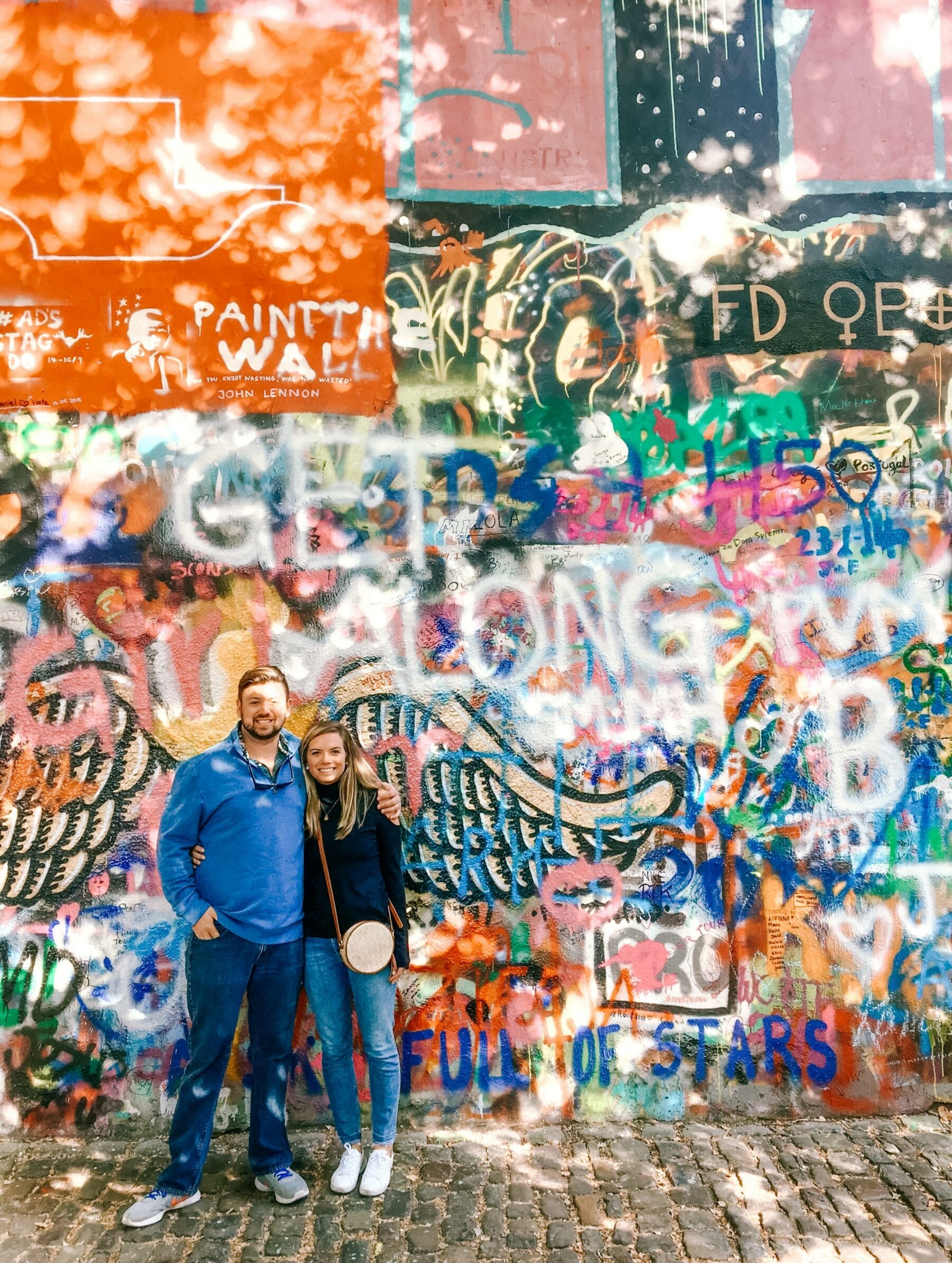
Prague is one of the most beautiful cities in Europe and one we keep coming back to. The things to do in Prague range from world-class breweries and centuries-old architecture to underground bars and one of the best food scenes in Central Europe — and very few cities do all of it at this price point. When Seth was living in Florence, he spent his cold-weather weekends leading walking tours in Prague. Over thirty tours later, he knows this city as well as anywhere we have ever been. We have been together three times — twice with friends and once with Seth’s parents — and it never gets old.
This guide covers everything: when to go, where to stay, the best restaurants and breweries, the top things to do in Prague, day trips, and how to get around. Whether it is your first visit or your fifth, this is the guide we would hand you before you left.
WHEN TO VISIT PRAGUE
There is genuinely no bad time to visit Prague. Peak season runs May through October when the weather is warmest, outdoor terraces are open, and the city is at its most lively — but that also means higher prices for flights and accommodation. If you are flexible, shoulder season in April or November offers excellent value with smaller crowds and the city still fully operational.
Summer in Prague is warm without being oppressive — mid-20s Celsius on most days — and the outdoor bar and dining scene is at its best. Winter is cold but Prague at Christmas is genuinely magical. The Christmas markets around Old Town Square are among the best in Europe and the city takes on a completely different atmosphere. Seth has led tours here in January and February and says the city is beautiful under snow with almost none of the summer crowds.
HOW TO GET TO PRAGUE
Prague Václav Havel Airport is well connected to most major European hubs with direct flights from London, Amsterdam, Paris, Frankfurt, and beyond. From within Europe, train is often the better option — Prague’s main station connects directly to Vienna, Berlin, Budapest, and Dresden, and the train journey into the city center drops you right in the middle of everything.
From the airport, the easiest option is a taxi or rideshare directly to your accommodation. The journey takes around 30 minutes depending on traffic. Always use a metered cab or book in advance — airport taxis without meters have a reputation for overcharging tourists.
Pro Tip: Before you leave home, grab an eSIM so you have data the moment you land. Saily is our go-to — use code THEJETLAGJOURNEY25 for 25% off. Airalo is a great alternative (code JLJ10 for 10% off).
CURRENCY AND TIPPING IN PRAGUE
Prague uses the Czech Koruna (CZK), not the Euro. This surprises a lot of first-time visitors — the Czech Republic is in the EU but has not adopted the Euro as its currency. Some tourist-facing businesses will accept Euros but you will get a much worse rate than exchanging to Koruna. Use an ATM on arrival and withdraw local currency rather than exchanging at the airport.
Tipping is appreciated but not mandatory the way it is in the US. A tip of 10 percent is standard at sit-down restaurants. At bars and pubs, rounding up the bill is common. Always tip in cash directly to your server rather than adding it to a card payment.
WHERE TO STAY IN PRAGUE
Stay in Prague 1 or Prague 2. Unlike a lot of European capitals, there are still genuinely affordable options right in the city center — you do not have to compromise on location to stay within budget. Being central means you can walk to almost everything on this list, which matters in a city as walkable as Prague.
Luxury: Grandior Hotel Prague — right on the edge of Old Town with excellent service and easy access to everything.
Boutique: Mosaic House Design Hotel — stylish, well located, and a step above the standard mid-range option.
Budget: Prague has some of the best value hostels in Europe. Look for options in Prague 1 or 2 with private rooms if you want the location without the full hotel price tag.
Pro Tip: Save all accommodation options as pins in Google Maps before you arrive so you can see exactly how central each option is relative to the things you want to do.
WHERE TO EAT IN PRAGUE
Prague’s food scene is better than most people expect and significantly cheaper than Western Europe. Czech cuisine leans hearty — think slow-braised meats, dumplings, and rich sauces — and the best versions of it are genuinely excellent. These are the restaurants we come back to every time.
Lokál — consistently one of the best restaurants in Prague for fresh Czech food and perfectly poured Pilsner Urquell. Book ahead because it is always busy. This is the spot Seth brought every group on his tours when they wanted a proper Czech meal.
Kolkovna Celnice — located near the Palladium shopping center, this is a great option for traditional Czech food after a day of exploring the city center. Good value and reliably excellent.
U Medvídků — a 500-year-old brewery and restaurant with several different rooms. We love the back room with its long beer hall tables and old-world atmosphere. The brewery tour here is one of the best experiences in Prague — more on that below. Originally established in 1499, it is home to one of the strongest commercially produced lagers in the world.
Pro Tip: If you are visiting Europe and want to make restaurant reservations easily or find meal deals, download TheFork before you go — it works across Prague and most of Europe.
WHERE TO DRINK IN PRAGUE: BREWERIES, PUBS AND BARS
Prague is a beer city. Czech beer is some of the best in the world and the brewing tradition here goes back centuries. These are the places worth your time — from historic breweries to the best bars Seth found after thirty tours worth of after-hours exploration.
U Medvídků Brewery Tour — this is one of the coolest experiences in Prague and one we recommend to everyone. The tour takes you through a brewery that has been operating since 1499, explains the brewing process, and ends with a tasting of their signature X33 — one of the strongest lagers in the world at 12.6% ABV. Book in advance. Seth has done this multiple times and it never gets old.
Beer Spa — yes, this is exactly what it sounds like. You soak in a tub of warm beer and hops while drinking unlimited Czech lager from a tap next to the tub. It sounds gimmicky but it is genuinely one of the most fun and unique experiences in Prague. We have done this together and it is the kind of thing you will talk about for years. Book ahead — the good ones fill up fast.
Staropramen Brewery — established in 1869 and now one of the most recognized Czech beer brands in the world, exporting to 37 countries. Tours are well organized and the tasting room is excellent.
Budvar Brewery (Český Budějovice) — technically a day trip but worth mentioning here. This 15th century brewery is the home of the original Budvar beer — the original Budweiser before the American version adopted the name. The story behind the naming dispute alone is worth the trip.
Boat Brewery (Pivovar na lodi) — a brewery on a ship moored under the Stefáník Bridge with two decks and a great atmosphere. Unique, fun, and a great stop on an evening walk along the river.
Pub crawl bars — Prague has a well-developed bar crawl scene centered around Wenceslas Square and the surrounding streets. The Pub chain features beer taps built into the tables that track your consumption — a novelty that is actually very fun with a group. Seth led groups through this neighborhood dozens of times and the energy here on a weekend night is hard to beat.
BEST THINGS TO DO IN PRAGUE
These are the things to do in Prague that we recommend to everyone — first-timers and repeat visitors alike. Seth has walked every one of these with tour groups more times than he can count and they never lose their impact.
Old Town Square and the Astronomical Clock — the heart of Prague and the starting point of almost every walking tour. The Astronomical Clock dates to 1410 and still chimes on the hour with a mechanical procession of figures. The square itself is surrounded by Baroque and Gothic architecture and is one of the most photographed spaces in Europe. Go early in the morning before the crowds arrive.
Charles Bridge — the 14th century stone bridge connecting Old Town to Malá Strana is lined with 30 Baroque statues and offers one of the best views in Prague. Go at sunrise or after dark to avoid the midday crowds. Seth always started his tours here at 8am and the bridge was nearly empty.
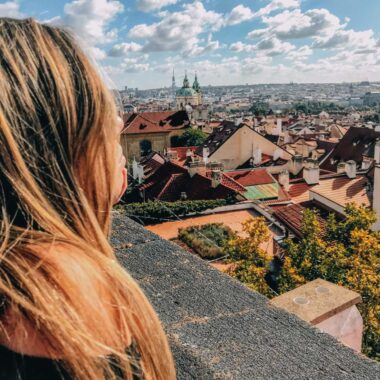
Prague Castle — the largest ancient castle complex in the world by area, sitting above the city on Hradčany hill. Allow at least half a day. The views from the castle district over the red-roofed city below are the best in Prague.
Josefov (the Jewish Quarter) — one of the most historically significant and sobering neighborhoods in Central Europe. The Old Jewish Cemetery dates to the 15th century and contains over 12,000 graves stacked in layers. The synagogues here are among the best-preserved in Europe. This is a must.
Wenceslas Square — more of a boulevard than a square, this is the commercial and cultural center of the New Town. It has been the site of some of the most significant moments in Czech history including the 1989 Velvet Revolution. Good restaurants and bars line the surrounding streets.
Petřín Hill and the Lookout Tower — a forested hill above Malá Strana with a miniature version of the Eiffel Tower at the top. The views from here are spectacular and the walk up through the orchards is one of the most peaceful things you can do in Prague.
Walking Tour — the best way to understand Prague is on foot with a good guide. The city’s history is layered and dense — Bohemian kings, Holy Roman Emperors, Nazi occupation, Communist rule, the Velvet Revolution — and a walking tour brings all of it to life. Free walking tours depart daily from Old Town Square. Seth led over thirty of them and they remain the single best introduction to the city.
THE BEST DAY TRIPS FROM PRAGUE
Prague makes an excellent base for day trips into the surrounding Bohemian countryside and neighboring countries. These are the best options within two hours.
Kutná Hora — two hours by train and home to the Sedlec Ossuary, known as the Bone Church. The interior of this small chapel is decorated with the bones of over 40,000 people, most of whom died during the Black Plague. It is one of the most surreal and memorable experiences in Central Europe. Pair it with a visit to the Gothic Cathedral of St. Barbara in town.
Karlštejn Castle — a 14th century Gothic castle on a hilltop about 40 minutes from Prague by train. The walk up through the village to the castle is charming and the views from the top are excellent. An easy half-day trip.
Dresden, Germany — just over two hours by train and a completely different architectural world. Dresden’s Baroque city center along the Elbe River was largely rebuilt after WWII and is stunning. The Zwinger Palace and the Frauenkirche are the highlights.
Český Krumlov — two hours south of Prague by train or bus, this UNESCO-listed medieval town built around a horseshoe bend in the Vltava River is one of the most picturesque places in Central Europe. Easy as a day trip or worth staying overnight.
HOW TO GET AROUND PRAGUE
Prague’s city center is extremely walkable — most of the major things to do in Prague are within 20 to 30 minutes of each other on foot. For longer distances, the metro is clean, fast, cheap, and easy to navigate. Trams cover routes the metro does not and are a great way to see the city while getting from A to B.
For rideshare, Bolt is the go-to app in Prague — cheaper than Uber and widely available. Download it before you arrive and have your payment method set up so you are never negotiating with a taxi driver outside the airport.
SAFETY IN PRAGUE
Prague is a very safe city by European standards. The main things to watch for are pickpockets in high-tourist areas — Old Town Square, Charles Bridge, and the metro — and overcharging at a small number of tourist-facing restaurants and exchange booths. Use ATMs rather than currency exchange offices, check menus for prices before ordering, and keep your bag in front of you in crowded areas. Beyond that, Prague is an easy and comfortable city to navigate.
ETIAS — WHAT AMERICAN TRAVELERS NEED TO KNOW
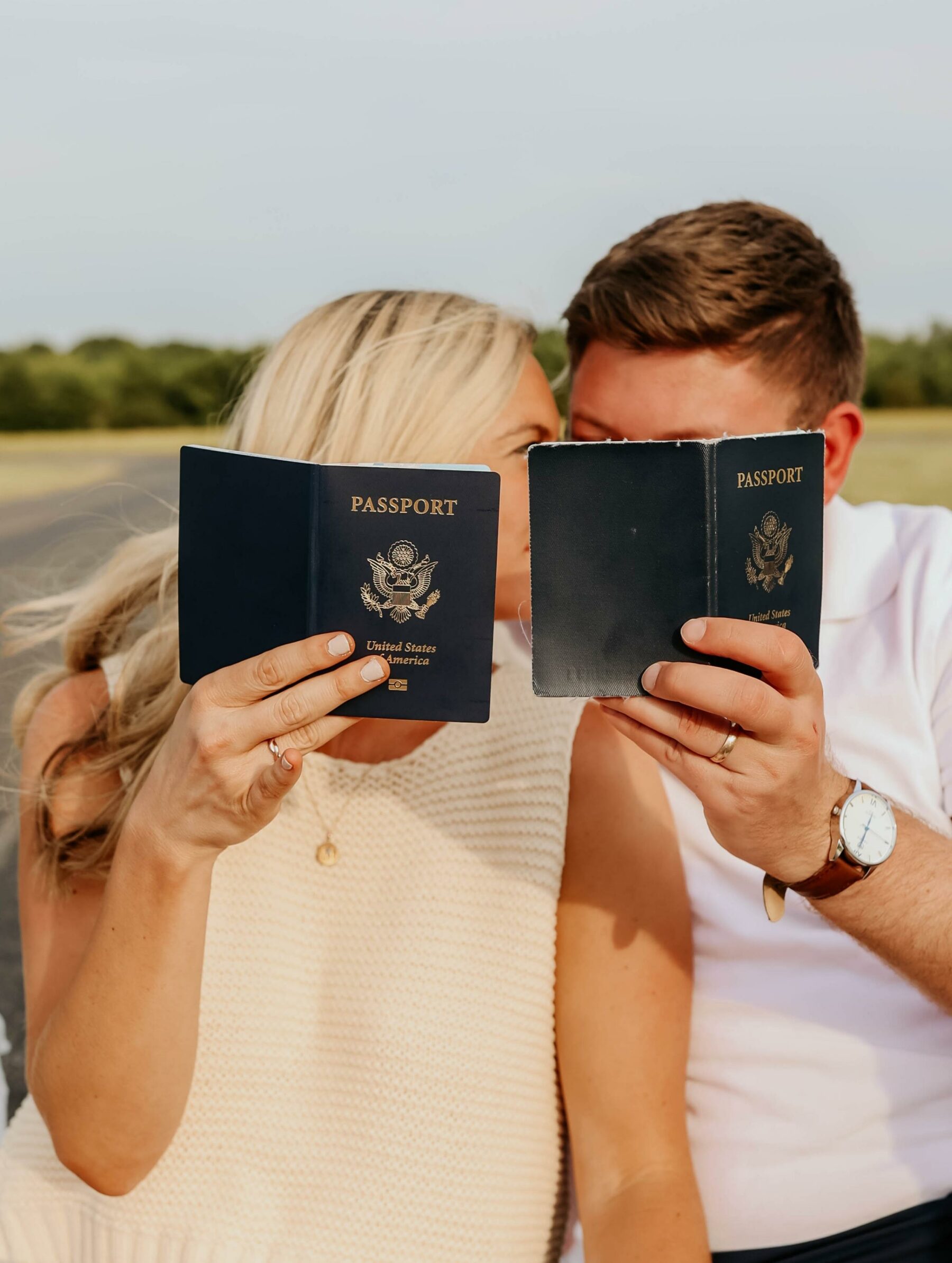
From late 2026, American travelers will need ETIAS authorization before visiting Europe, including the Czech Republic. It takes around 10 minutes to apply online and costs €20. Read our complete ETIAS guide for everything you need to know before your trip.
FREQUENTLY ASKED QUESTIONS ABOUT THINGS TO DO IN PRAGUE
How many days do you need in Prague?
Three to four days is the sweet spot for a first visit — enough time to cover the main things to do in Prague, do a brewery tour, take a day trip, and actually settle into the city rather than rushing through it. Two days is doable but you will leave wanting more.
Is Prague expensive?
Prague is one of the best value cities in Europe. A pint of excellent Czech beer costs around 50–70 CZK (roughly €2–3). A full sit-down meal at a good restaurant runs €10–20 per person. Accommodation in the city center is significantly cheaper than equivalent options in Paris, Amsterdam, or London. It is a genuinely affordable city without feeling like a compromise.
What is Prague known for?
Prague is known for its extraordinarily well-preserved medieval and Baroque architecture, its beer culture and centuries-old brewery tradition, the Charles Bridge, Prague Castle, and a nightlife scene that punches well above its weight. It is one of the few European capitals that emerged from WWII with its historic center largely intact.
What is the beer spa experience in Prague?
A beer spa involves soaking in a warm tub infused with beer, hops, and yeast while drinking unlimited Czech lager from a tap next to the bath. It sounds gimmicky but it is one of the most fun and unique experiences in Prague. We have done it and genuinely loved it. Book in advance — the well-reviewed ones fill up quickly.
What currency does Prague use?
Prague uses the Czech Koruna (CZK), not the Euro. Withdraw local currency from an ATM on arrival for the best rates. Some tourist businesses accept Euros but at unfavorable exchange rates.
Is Prague worth visiting?
Absolutely. Prague consistently ranks among the most beautiful cities in Europe for good reason. The architecture, the beer, the food, the history, and the value for money make it one of the strongest cases for any European itinerary. Seth has been over thirty times leading tours and still finds new things to love about it every visit.
MORE FROM THE JET LAG JOURNEY
Planning a bigger European trip? Read our guide to how to plan a trip to Europe for a complete breakdown of everything to sort before you go. For more Central European inspiration, our Budapest guide is a natural companion to Prague — the two cities are just four hours apart by train. Check our 50 Europe travel tips for everything we wish we had known on our first trip. And if you are planning an extended stay, our Nomad Planner has cost-of-living data and a Schengen tracker built specifically for long-term travel in Europe.