
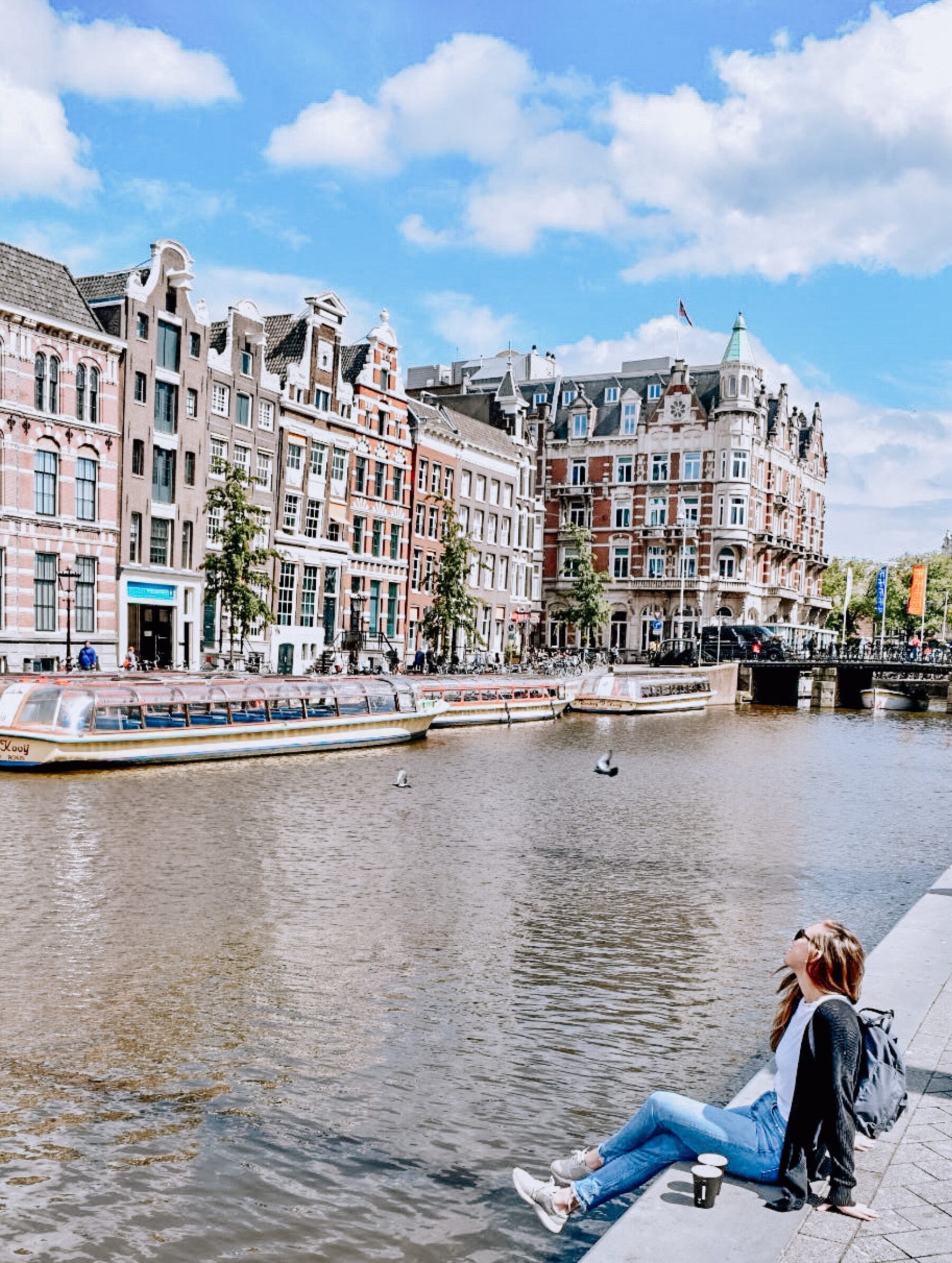
Amsterdam is one of Europe’s most iconic cities and one that rewards you every time you visit. The things to do in Amsterdam range from world-class museums and historic canal walks to a nightlife scene that runs all night and a food culture that keeps getting better. We have been twice and both trips felt completely different — which is the mark of a city worth returning to. Fair warning before you go: the public transport goes on strike twice a year, and on our very first day in Amsterdam we were caught in one of those strikes and missed our timed entry to the Anne Frank House. Book that one as early as possible and have a backup plan for getting around on day one.
This complete guide covers everything you need — when to visit, where to stay, the best restaurants and bars, the top things to do in Amsterdam, day trips, and how to get around without getting caught out.
WHEN TO VISIT AMSTERDAM
Amsterdam is a year-round destination with each season offering something distinct. May through September is the warmest and most popular window — long days, outdoor terrace culture in full swing, and the canals at their most photogenic. The downside is crowds and higher prices, especially in July and August.
Spring is arguably the best time to visit — mild temperatures, tulip season in full bloom, and fewer tourists than peak summer. If you want to visit Keukenhof Gardens, plan for mid-March through mid-May. Winter is cold but Amsterdam at Christmas is charming, with markets along the canals and a completely different, quieter atmosphere. Avoid the King’s Day weekend in late April if you are not specifically coming for it — the city is absolutely packed.
HOW TO GET TO AMSTERDAM
Amsterdam Schiphol Airport is one of the best-connected airports in Europe with direct flights from most major US cities and virtually every European hub. The train from Schiphol to Amsterdam Centraal takes about 15 minutes and runs constantly — it is the easiest airport-to-city connection in Europe.
By train from within Europe, Amsterdam connects directly to Paris (3.5 hours on Thalys), London (4 hours via Eurostar through Brussels), Brussels (2 hours), and Cologne (2.5 hours). The train station at Amsterdam Centraal is magnificent and right in the heart of the city.
Pro Tip: Grab an eSIM before you leave home so you have data the moment you land. Saily is our go-to — use code THEJETLAGJOURNEY25 for 25% off. Airalo is a great alternative (code JLJ10 for 10% off).
CURRENCY AND TIPPING IN AMSTERDAM
Amsterdam uses the Euro. Card payments are widely accepted but it is worth carrying some cash for smaller cafes, markets, and street food stalls. Tipping is appreciated but not as expected as in the US — rounding up the bill or leaving 10 percent at a sit-down restaurant is standard. At bars, rounding up is common. Always tip in cash directly to your server.
WHERE TO STAY IN AMSTERDAM
The city center — particularly the Canal Ring (Grachtengordel), the Jordaan, and De Pijp — puts you within walking distance of the best things to do in Amsterdam. The Jordaan is our top recommendation: quieter than the Red Light District area, full of independent shops and restaurants, and as picturesque as Amsterdam gets.
Luxury: The Dylan Amsterdam in the Canal Ring — a boutique hotel in a 17th century building with one of the best restaurants in the city.
Mid-range: Look for canal-facing guesthouses in the Jordaan or De Pijp for the best combination of atmosphere and value.
Budget: Amsterdam has a strong hostel scene. Stayokay Amsterdam Vondelpark and Generator Amsterdam are well-run options with good locations.
Pro Tip: Amsterdam has a tourist tax added to all accommodation — factor this into your budget when comparing prices.
WHERE TO EAT IN AMSTERDAM
Amsterdam’s food scene has evolved significantly over the past decade and now punches well above what you might expect for a northern European capital. Dutch cuisine itself leans toward hearty comfort food — stroopwafels, herring, bitterballen, Dutch pancakes — but the city’s multiculturalism means you can find exceptional food from virtually every corner of the world. These are the spots worth your time.
De Kas — a restaurant set inside a greenhouse in Frankendael Park, serving hyper-seasonal dishes grown almost entirely on the premises. One of the most unique dining experiences in Amsterdam. Book well ahead.
Pancakes Amsterdam — Dutch pancakes are a must-try and Pancakes Amsterdam does them as well as anywhere. Thin, crepe-like, and available with an enormous range of sweet and savory toppings.
Haesje Claes — traditional Dutch cuisine in a warm, old-Amsterdam setting. Good for a proper Dutch meal — stamppot, erwtensoep, and the classics done well.
Albert Cuyp Market — the best street food experience in Amsterdam. The city’s largest open-air market runs daily except Sunday and is the place to try fresh herring, stroopwafels straight off the iron, and Dutch fries with satay sauce.
WHERE TO DRINK IN AMSTERDAM
Amsterdam’s bar scene ranges from centuries-old brown cafes (bruine kroegen) — dark, wood-paneled, and wonderfully cozy — to cocktail bars, craft beer spots, and the famous coffeeshops. These are the places we recommend.
Brouwerij ‘t IJ — a craft brewery built inside a working windmill. The beers are excellent and the setting is genuinely unlike anything else. An Amsterdam essential.
Café de Klos — a classic Amsterdam brown cafe with great ribs and a proper local atmosphere. This is the kind of bar you stay in for hours without noticing.
Tales and Spirits — a speakeasy-style cocktail bar with an exceptional drinks menu and an intimate atmosphere. Go for a nightcap after dinner.
A note on coffeeshops: Amsterdam’s coffeeshops are legal and well-regulated. If you are going to visit one, start low — the products here are significantly stronger than what most visitors are used to. The same applies to the space cakes and brownies sold at tourist shops throughout the city. They look harmless but they are not — the strength varies wildly and the effects take time to kick in. Treat them with serious respect and do not buy from street vendors.
BEST THINGS TO DO IN AMSTERDAM
These are the things to do in Amsterdam that belong on every itinerary — from the unmissable museums to the experiences you will not find anywhere else.
Anne Frank House — the most important and moving museum in Amsterdam. The secret annex where Anne Frank and her family hid for two years during the Nazi occupation is preserved as it was, and the experience of walking through it is unlike anything else in Europe. Book tickets online as far in advance as possible — they sell out weeks ahead. And a practical note: Amsterdam’s public transport strikes twice a year without much warning. We were caught in one on our first day and missed our timed entry. Build in extra time and have a backup plan for getting across the city.
Rijksmuseum — the national museum of the Netherlands and one of the greatest art museums in Europe. Rembrandt’s Night Watch and Vermeer’s The Milkmaid are here. Allow at least three hours. Book ahead.
Van Gogh Museum — the largest collection of Van Gogh’s work in the world, tracing his entire career from the dark early Dutch paintings to the vivid Arles canvases. Right next to the Rijksmuseum. Book tickets well in advance.
Canal Cruise — seeing Amsterdam from the water gives you a completely different perspective on the city. The 17th century Canal Ring is a UNESCO World Heritage Site and the canal houses look entirely different from a boat than from street level. Evening cruises are especially atmospheric.
Rent a Bike — Amsterdam is the most bike-friendly city in Europe and cycling is genuinely the best way to get around. Rental shops are everywhere. Stick to the bike lanes and yield to trams — locals cycle fast and are not forgiving of tourists who drift into the wrong lane.
Free Walking Tour — one of the best ways to understand Amsterdam’s history and get oriented in the city. We did a free walking tour on our first visit and it completely changed how we experienced the rest of the trip. Ours ended with the guide inviting the group to a community event that evening — a gathering at a local venue where people from all over the world shared stories from their lives. Seth got up and shared some of his own history and genuinely moved the room. It was one of those unexpected travel moments you remember for years. Free tours depart daily from Dam Square — tip your guide at the end.
Vondelpark — Amsterdam’s most beloved park and the city’s living room. On a warm afternoon it fills with locals picnicking, musicians playing, and people watching the world go by. A great place to decompress between museums.
Jordaan Neighborhood Walk — the most picturesque neighborhood in Amsterdam deserves at least half a day on foot. Narrow canal streets, independent galleries, antique shops, and some of the best brown cafes in the city. Get lost in it.
THE BEST DAY TRIPS FROM AMSTERDAM
Keukenhof Gardens — only open mid-March through mid-May but worth planning an entire trip around during tulip season. Seven million bulbs across 79 acres just outside the city. One of the most spectacular natural displays in Europe.
Zaanse Schans — a historic village 20 minutes from Amsterdam by train with working windmills, traditional wooden houses, and museums dedicated to Dutch craftsmanship. A good half-day trip.
Haarlem — 20 minutes by train and one of the most charming small cities in the Netherlands. Beautiful canal streets, a stunning medieval church, and a relaxed pace that feels completely different from Amsterdam.
Delft and The Hague — about an hour south, this day trip combines the historic home of Royal Delft porcelain with the Dutch seat of government and the excellent Mauritshuis museum (home to Vermeer’s Girl with a Pearl Earring).
GETTING AROUND AMSTERDAM
Amsterdam is highly walkable in the center and cycling is the most enjoyable way to explore. For longer distances, trams are the main public transport option — reliable, frequent, and well-mapped. The metro is useful for reaching neighborhoods further out.
One important caveat: Amsterdam’s public transport goes on strike twice a year, typically with short notice. If you have a timed museum entry or anything time-sensitive on a given day, check the news that morning and have a taxi or rideshare backup. Bolt works well in Amsterdam and is the rideshare app we recommend across Europe. We learned this lesson the hard way on day one of our first trip.
SAFETY IN AMSTERDAM
Amsterdam is a safe city by European standards. The main things to watch for are pickpockets in the tourist-heavy areas around Centraal Station and the Red Light District, and cyclists — the bike culture is real and bikes move fast. Walk on the correct side of the pavement, stay out of bike lanes, and keep your bag secure in crowds. The Red Light District is generally safe but can get rowdy late at night on weekends. Beyond that, Amsterdam is an easygoing and welcoming city.
ETIAS — WHAT AMERICAN TRAVELERS NEED TO KNOW
From late 2026, American travelers will need ETIAS authorization before visiting Europe, including the Netherlands. It takes around 10 minutes to apply and costs €20. Read our complete ETIAS guide for everything you need to know before your trip.
FREQUENTLY ASKED QUESTIONS ABOUT THINGS TO DO IN AMSTERDAM
How many days do you need in Amsterdam?
Three to four days is the sweet spot for a first visit. That gives you enough time for the major museums, a canal cruise, a day trip, and enough wandering to actually feel the city rather than just ticking boxes. Two days is doable but you will leave with a long list of things you missed.
Do I need to book the Anne Frank House in advance?
Yes — book as far in advance as possible, ideally weeks ahead. Tickets sell out consistently and there is no walk-up entry. We missed our slot on our first visit due to a public transport strike — Amsterdam’s trams and buses go on strike twice a year, sometimes with very little notice. Book your ticket early and have a rideshare backup for getting there on the day.
Is Amsterdam expensive?
Amsterdam is mid-range to expensive by European standards. Museum entry runs €20–25 per person. A sit-down dinner costs €20–35 per person. Accommodation in the center is pricey. That said, many of the best things to do in Amsterdam are free — the parks, the canal walks, the markets, and the neighborhoods themselves cost nothing.
Is it safe to visit the Red Light District in Amsterdam?
Yes, it is generally safe during the day and early evening. Late at night on weekends it gets crowded and rowdy. The city has been working to reduce overtourism in this area. Be respectful — photography of the windows is illegal and takes about two seconds to get you in serious trouble with locals.
What is the best neighborhood to stay in Amsterdam?
The Jordaan is our top pick — beautiful, central, full of great bars and restaurants, and quieter than the areas closer to Centraal Station. De Pijp is a strong second, especially for food. Both put you within easy reach of all the major things to do in Amsterdam.
Can you drink on the streets in Amsterdam?
Technically it is not permitted in most public spaces, though enforcement is selective. The bigger issue is that Amsterdam has introduced fines for antisocial behavior linked to drinking in tourist areas. Enjoy drinks at terrace bars and brown cafes — that is the right way to do it anyway.
MORE FROM THE JET LAG JOURNEY
Planning a bigger European trip? Read our guide to how to plan a trip to Europe for a full breakdown of everything to sort before you go. For more on traveling Europe on a budget, our 40 ways to travel cheaper guide has everything you need. Check our 50 Europe travel tips for the things we wish we had known on our first trip. And if you are planning an extended stay, our Nomad Planner has cost-of-living data for 78 cities and a Schengen tracker built for long-term travel in Europe.