
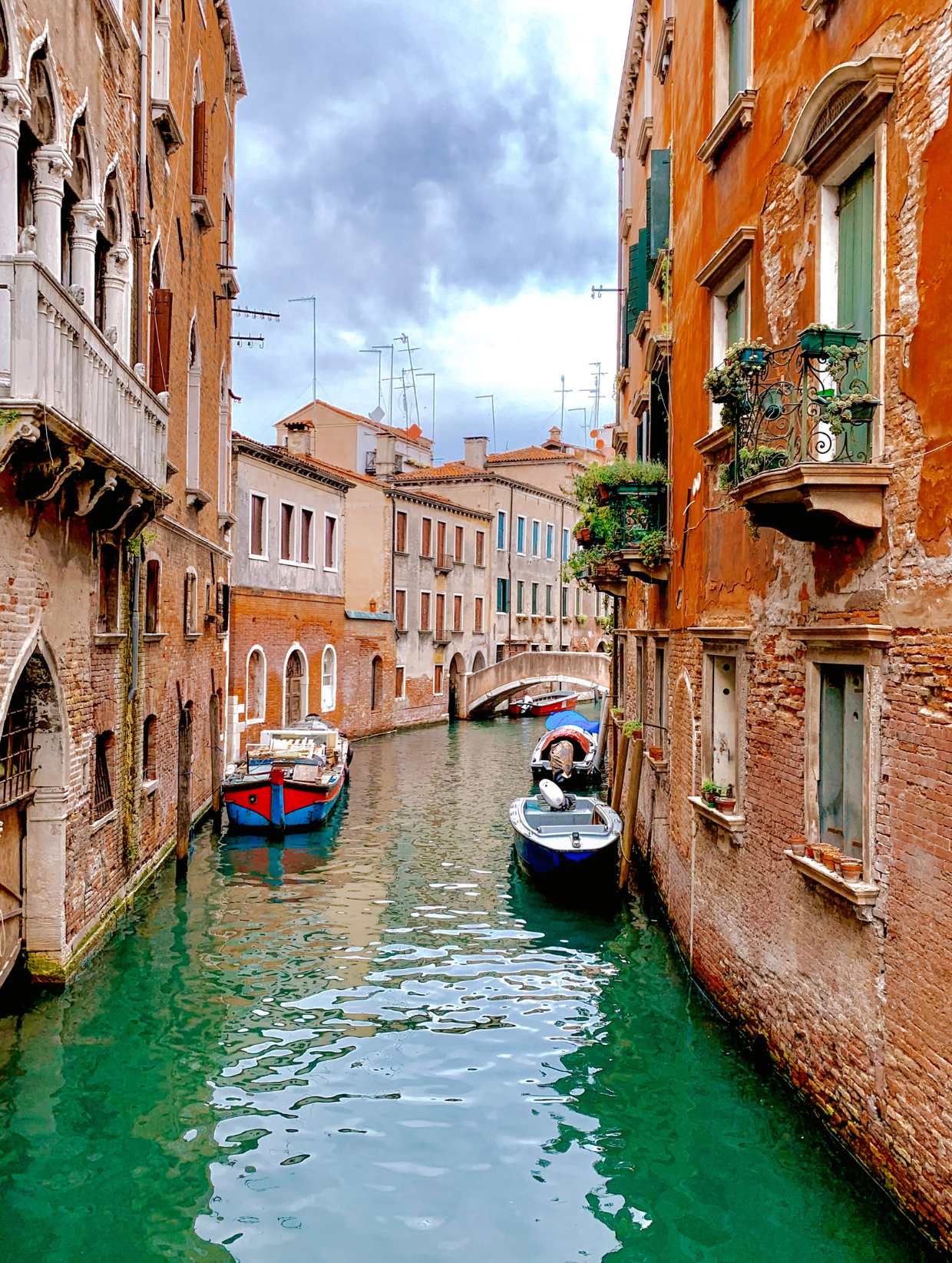
Venice is a city unlike anything else on earth and three days is enough time to experience it properly — the main islands, the canals, and the two day trips that we think most visitors underestimate. This 3 day Venice itinerary includes Murano and Burano, both of which we highly recommend to anyone visiting Venice. Murano for its glassblowing tradition and Burano for the brightly painted fishing houses that make it one of the most photogenic places in Italy. In between, our favourite thing to do in Venice is the simplest — grab a snack from a bacaro, find a spot alongside one of the quieter canals, and just sit. Venice rewards that kind of slowness.
HOW TO GET TO VENICE
Venice Marco Polo Airport (VCE) is the closest airport with good connections throughout Europe and from the US via connecting flights. From the airport, the Alilaguna water bus takes about 75 minutes to San Marco or Rialto and drops you right into the heart of the city. A water taxi is faster (about 25 minutes) but significantly more expensive. The people mover monorail connects the Tronchetto car park to Piazzale Roma if you are arriving by car or bus from the mainland.
By train, Venice Santa Lucia station sits right on the Grand Canal and connects to Verona (1.5 hours), Florence (2 hours), Milan (2.5 hours), and Rome (3.5 hours on the high-speed Frecciarossa). Arriving by train and walking straight out of the station onto the Grand Canal is one of the great first impressions of any city in Europe.
Pro Tip: Grab an eSIM before you leave home so you have data the moment you land. Saily is our go-to — use code THEJETLAGJOURNEY25 for 25% off. Airalo is a great alternative (code JLJ10 for 10% off).
WHERE TO STAY IN VENICE
Staying on the main island (Venezia) is the right call for a first visit — the experience of walking out of your hotel into the canal streets is what Venice is about. San Marco and the Rialto area are the most central. Dorsoduro and Cannaregio are quieter neighbourhoods with a more local feel and slightly better value. Avoid staying on the Lido or mainland Mestre unless budget is the absolute priority — you will spend too much time commuting.
Luxury: The Gritti Palace on the Grand Canal or Hotel Danieli near San Marco — two of the great classic Venice hotels.
Mid-range: Look for hotels in Dorsoduro or Cannaregio for better value without sacrificing the island experience.
Budget: Generator Venice on Giudecca island offers great value with easy vaporetto access to the main sights.
3 DAY VENICE ITINERARY
Day 1: Explore Venice
Start at St Mark’s Square (Piazza San Marco) — the heart of Venice and home to St Mark’s Basilica, the Doge’s Palace, and the Campanile bell tower. The Basilica is free to enter (timed entry, book online to skip the queue). The interior is covered in Byzantine gold mosaics and is extraordinary. Climb the Campanile for the best views over the city and the lagoon — worth the small entry fee.
From San Marco, walk toward the Rialto Bridge — follow the yellow signs but also allow yourself to get lost in the alleys between. Getting lost in Venice is not a problem, it is the point. The Rialto Bridge spans the Grand Canal at its narrowest point and has been here in some form since the 12th century. The Rialto Market on the far side is one of the best food markets in Italy — open mornings only, best on weekday mornings before the crowds arrive.
In the afternoon, ride the vaporetto Line 1 the full length of the Grand Canal from Piazzale Roma to San Marco. Sit at the front or back for the best views. It is the cheapest sightseeing tour in Venice and takes about 45 minutes. The palaces, bridges, and church domes you see from the water give you the full scale of what makes Venice extraordinary.
In the evening, do a bacaro crawl — Venice’s version of tapas bar hopping. Bacari are the small, standing-room wine bars serving cicheti (small Venetian snacks) for €1–3 each alongside a glass of local wine (ombra). The area around the Rialto Market has the highest concentration. This is the most authentically Venetian way to eat dinner and one of our favourite things to do in Venice.
Day 2: Murano and Burano
Take the morning vaporetto from Fondamente Nove to Murano — about 10 minutes by water bus. Murano has been the centre of Venetian glassblowing for over 700 years. Most glass factories offer free demonstrations — watch the glassblowers at work before the tourist crowds arrive and the quality drops. The Museo del Vetro (Glass Museum) is excellent if you want the full history. Allow two hours on Murano.
From Murano, take the vaporetto on to Burano — about 40 minutes from Murano. Burano is the island of brightly painted fishermen’s houses and it is one of the most visually striking places in Italy. Every house a different colour, every colour intense. Walk the main streets, eat a fresh seafood lunch at one of the canal-side restaurants, and spend at least two hours here. We highly recommend this to everyone who visits Venice — most people skip it and miss one of the best days the lagoon has to offer.
Return to Venice in the late afternoon and spend the evening along the quieter canals of Dorsoduro — pick up something to eat from a bacaro and find a spot to sit along one of the side canals as the light fades. This is our favourite way to end a day in Venice. The light here in the evening is extraordinary.
Day 3: Relax and Explore
Use the final day to slow down and go deeper into whatever interested you most on days one and two. Visit the Peggy Guggenheim Collection in Dorsoduro — one of the best modern art museums in Europe, in a stunning palazzo directly on the Grand Canal. Or book a cooking class — several excellent options run out of traditional Venetian kitchens and include a market visit to the Rialto, cooking lunch together, and eating what you have made. A great way to spend a final morning.
In the afternoon, revisit your favourite canal, find your bacaro from day one, and do it all again. Or simply sit. Venice does not need to be rushed on the last day — the city rewards people who stop moving.
TIPS FOR PLANNING YOUR VENICE TRIP
Venice introduced a day-tripper entry fee in 2024 for peak season visitors — check the current requirements before your trip. Book St Mark’s Basilica timed entry in advance to skip the queue. Vaporetto day passes (€25) are worth it if you are moving around a lot. Carry cash for bacari, markets, and smaller restaurants. And do Murano and Burano — almost everyone who skips them regrets it.
ETIAS — WHAT AMERICAN TRAVELERS NEED TO KNOW
From late 2026, American travelers will need ETIAS authorization before visiting Europe, including Italy. It takes around 10 minutes to apply and costs €20. Read our complete ETIAS guide for everything you need to know.
FREQUENTLY ASKED QUESTIONS ABOUT THE VENICE ITINERARY
Is 3 days enough for this Venice itinerary?
Three days is a great amount of time for a first visit — enough for the main sights, a full day on Murano and Burano, and enough slow time along the canals to actually feel the city. Two days is doable but you will feel rushed. Five days lets you go much deeper into the quieter neighbourhoods and outer islands.
Are Murano and Burano worth visiting?
Absolutely — we highly recommend both to everyone visiting Venice. Murano for the glassblowing tradition and the chance to see the craftsmen at work. Burano for the brightly coloured houses that make it one of the most photogenic places in Italy. The round trip by vaporetto takes a full day and is one of the best days the lagoon has to offer.
What is a bacaro in Venice?
A bacaro is a traditional Venetian wine bar serving cicheti — small snacks similar to tapas — for €1–3 each alongside a glass of local wine called an ombra. The bacaro crawl around the Rialto Market area is the most authentically Venetian way to eat in the city and one of our favourite things to do in Venice. Go in the evening when the locals are out.
Is Venice worth visiting?
Yes — absolutely. Venice is one of the most extraordinary places on earth and unlike anywhere else you will ever visit. It can feel overwhelming at peak season but slow down, get off the main tourist routes, do Murano and Burano, and spend time along the quieter canals. The real Venice reveals itself when you stop rushing.
What is the best thing to do in Venice for free?
Ride vaporetto Line 1 the full length of the Grand Canal — it is the cheapest and best sightseeing tour in Venice at the cost of a single ticket. Get lost in the alleys of Cannaregio or Dorsoduro. Sit alongside a canal with a snack from a bacaro. The best things to do in Venice cost almost nothing.
MORE FROM THE JET LAG JOURNEY
Planning more of Italy? Read our 3 day Amalfi Coast itinerary and our guides to things to do in Florence. For the Mediterranean from the water, check out Voyage — our boutique sailing trips through the Mediterranean including Italy. And for planning your full European trip, our guide to how to plan a trip to Europe covers everything.